


Loaded Bodied Waggler Float Guide | Uses, Shotting & Tips
Loaded Bodied Waggler Float Guide | Uses, Shotting & Tips
29 June 2026 - 0 Comments
Posted by Bobby Flotteur
Loaded Bodied Wagglers: What They Are, When to Use Them and Why They Still Matter
Float fishing has always been full of small, clever refinements. To the casual eye, one waggler may look much like another, but to an experienced angler each pattern has a purpose. Straight wagglers, insert wagglers, pellet wagglers and bodied wagglers all solve slightly different problems.
One of the most useful, and sometimes overlooked, patterns is the loaded bodied waggler.
It is a float designed for distance, stability and control. It casts well, sits well, behaves nicely in a breeze, and allows the angler to fish with far less shot down the line than would be needed with an unloaded float of similar size. For many stillwater situations, especially when fishing beyond the rod tip or dealing with ripple, tow or deeper water, it is one of the most practical waggler designs available.
A little history
The waggler became a mainstay of British coarse fishing because of one simple feature: it is attached to the line at the bottom only. Unlike a stick float or Avon float, which are normally held top and bottom with float rubbers, a waggler is fixed or run from its base. This allows the line between rod tip and float to be sunk beneath the surface, reducing wind drag and giving excellent control on stillwaters.
Traditional wagglers were commonly made from peacock quill, reed, cane and balsa. As match and pleasure fishing developed through the twentieth century, anglers began refining float patterns to suit different conditions. Slim straight wagglers gave fine presentation. Insert wagglers offered greater sensitivity. Bodied wagglers added buoyancy and casting weight. Loaded versions then took that idea a stage further by building some of the necessary weight into the base of the float itself.
The loaded bodied waggler is therefore a very practical evolution of traditional float design. It keeps the charm and visibility of a classic waggler, but adds extra casting performance and stability.
What is a loaded bodied waggler?
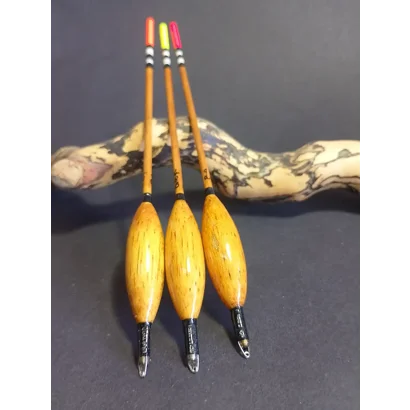
A bodied waggler has a thicker buoyant body, usually towards the lower part of the float. This body gives the float extra buoyancy and allows it to carry more weight than a slim straight waggler.
A loaded waggler has weight built into the base. This may be brass, wire, lead-free metal or another dense insert. The loading helps the float cast straight and reduces the amount of split shot needed to cock it.
Put the two together and you get a loaded bodied waggler: a bottom-attached float with a buoyant body and built-in base weight.
In practical terms, that means:
-
better casting distance;
-
improved accuracy;
-
less shot needed around the float;
-
less weight required down the line;
-
good stability in ripple, tow and awkward light wind;
-
a highly visible tip at range;
-
a useful float for bigger stillwaters, lakes, pits, reservoirs and commercial fisheries.
It is not a float for every job, but when conditions suit it, it can be a superb choice.
Why are loaded bodied wagglers useful?
The main advantage is weight distribution.
With an unloaded waggler, much of the shot needed to cock the float has to be added to the line, usually either around the base of the float or spread down the rig. That works perfectly well, but larger shot can damage line, create clumsy rigs and make presentation less flexible.
A loaded bodied waggler already carries part of that weight in its base. This makes the float behave almost like a little dart in flight. It punches out cleanly, lands consistently and settles quickly.
This is especially useful when you need to fish accurately at distance. On a stillwater, being able to cast repeatedly to the same patch of feed is a big advantage. Whether you are fishing over groundbait for bream, loose-feeding casters for roach, or presenting corn or pellet for tench and carp, accuracy matters.
The other advantage is that you can often fish with a cleaner, more sensitive lower rig. Because the float itself is partly loaded, you do not need to hang a heavy bulk of shot down the line just to make it work. That allows you to adjust the final dropper shot, control the fall of the bait and register lift bites more clearly.
When should you use one?
A loaded bodied waggler is at its best when you need a combination of casting weight, visibility and stability.
It is particularly useful for:
Distance fishing on stillwaters
This is one of its strongest uses. If the fish are beyond comfortable range for a slim insert waggler, the loaded bodied waggler gives you extra casting power without turning the rig into a heavy, crude setup.
Fishing in wind, ripple or tow
Stillwaters are rarely truly still. A light breeze, surface ripple or undertow can make a delicate float difficult to control. The extra body and base loading help the float sit more steadily, making it easier to read proper bites rather than every little movement of the water.
Bream and skimmer fishing
Bream fishing often involves casting to a baited area and keeping the presentation steady. A loaded bodied waggler is ideal for fishing slightly over depth, especially with a small tell-tale shot near the bottom. Bites may show as slow sail-away movements, dips, trembles or classic lift bites.
Tench fishing
Tench are a wonderful species to catch on the float, particularly early and late in the day. A loaded bodied waggler can be fished over depth with bait hard on the bottom, making it useful for lift-method style fishing. When a tench picks up the bait and lifts the lower shot, the float may rise, tilt or appear to “go light” before moving away.
By “go light”, anglers mean the float suddenly sits higher in the water than it should — often showing more of the tip than normal — because the fish has lifted the bottom shot off the lakebed. That reduction in weight makes the float more buoyant, so it pops up slightly before any sideways movement.
Carp on lakes and commercials
For carp, especially when fishing corn, pellet, meat or paste at range, a loaded bodied waggler gives a robust and visible presentation. It is not as crude as a controller float or surface setup, and it allows proper float fishing over depth or through the water.
Roach, rudd and hybrids at range
Although many anglers think of bodied wagglers as big-fish floats, smaller versions can be excellent for quality roach, rudd and hybrids when they are feeding beyond short-pole or light-waggler range. The key is not to over-shot the lower line. Let the float do the casting work and keep the hookbait presentation as natural as possible.
When should you not use one?
No float is perfect for every situation, and a loaded bodied waggler is no exception.
It is usually not the best choice when fishing very close in, especially in shallow, clear water where splash and disturbance matter. In those conditions, a fine insert waggler, pole float or delicate quill may be better.
It is also not ideal when you need the lightest possible on-the-drop presentation. Because the float carries built-in weight and usually has a more visible body, it is designed more for control and casting than absolute delicacy.
On fast rivers, a loaded bodied waggler can also be the wrong tool. A waggler is attached at the bottom only, so when you try to hold back hard in flowing water, the float can drag, tilt or pull under. For proper trotting in pacey water, a stick float, Avon or chubber will often give better control.
Avoid using one where weed, surface debris or awkward flow will constantly pull the line or body out of position. The waggler is at its best when it can sit naturally and be read clearly.
Loaded bodied waggler vs insert waggler
An insert waggler is usually the more sensitive float. Its fine tip shows delicate bites beautifully and it is excellent for shy-biting fish, calm water and refined presentation.
A loaded bodied waggler is the more stable and powerful tool. It casts further, copes better with wind, and gives you better control when fishing at range.
A simple way to think of it is this:
Insert waggler = finesse and sensitivity.
Loaded bodied waggler = distance, stability and control.
Both have a place in the float box.
How to shot a loaded bodied waggler
Shotting depends on the float, depth, species and conditions, but the general principle is straightforward: let the float’s built-in loading do most of the casting work.
Use only enough shot to cock the float correctly and settle the tip to the required level. Then place your smaller shot down the line according to how you want the bait to fall.
For fishing on or near the bottom, a small bulk with one or two droppers is a good starting point. For roach, rudd and mixed fish, spreading smaller shot shirt-button style can give a slower, more natural fall. For bream, tench and carp over depth, a tell-tale shot close to the bottom can help produce and register lift bites.
With my handmade 4BB loaded bodied waggler, the built-in loading means only a small amount of additional shot is needed to set the float. That is the beauty of the design: the float carries the casting weight, while the angler keeps control of the presentation.
Techniques suited to loaded bodied wagglers
Fishing over depth
This is a classic approach for bream, tench and carp. Plumb the depth carefully and set the rig slightly over depth so the bait sits naturally on the bottom. A small tell-tale shot near the hook helps anchor the presentation and gives clear bite indication.
Lift-method style fishing
A loaded bodied waggler can be used very effectively for lift bites. When a fish picks up the bait and lifts the bottom shot, the float may rise, lean, flatten slightly or suddenly move away. This is one of the most exciting forms of stillwater float fishing.
Fishing to a baited area
Because these floats cast accurately, they are excellent for fishing to a bed of groundbait, pellets, corn, hemp or casters. Feed carefully, cast accurately, sink the line, and keep the rig working in the same area.
Fishing in a ripple
A slight chop can be a good thing, especially for bigger stillwater fish. The loaded bodied waggler gives enough stability to remain readable without being dragged all over the place by the surface movement.
Why handmade versions still have a place
Modern tackle shops are full of plastic and mass-produced wagglers, and many of them work perfectly well. But a handmade loaded bodied waggler made from traditional materials offers something different.
Balsa, cane and carefully balanced loading give the float a particular feel. It casts smoothly, settles naturally and has the character of a traditional piece of tackle. For anglers who still enjoy float fishing as a craft rather than merely a method of catching fish, that matters.
A well-made float is not just decoration. Shape, balance, loading, tip visibility and body position all affect how it performs.
Final thoughts
The loaded bodied waggler is one of those floats that quietly earns its place in the box. It may not be the most delicate float, nor the right answer for every swim, but when you need distance, stability and clean presentation, it is hard to beat.
For bream, tench, carp, quality roach, rudd and hybrids on stillwaters, it remains a wonderfully practical pattern. It carries the weight where you want it, casts with confidence, sits well in awkward conditions and allows the bait to be presented with far less clutter down the line.
In short, the loaded bodied waggler is a traditional idea that still makes complete sense today.
Looking for more advice? Visit my Fishing Float Guides page for more help on choosing and using traditional floats.
Optional, for replies
No comments posted yet, check back soon.


